
Harish Projects
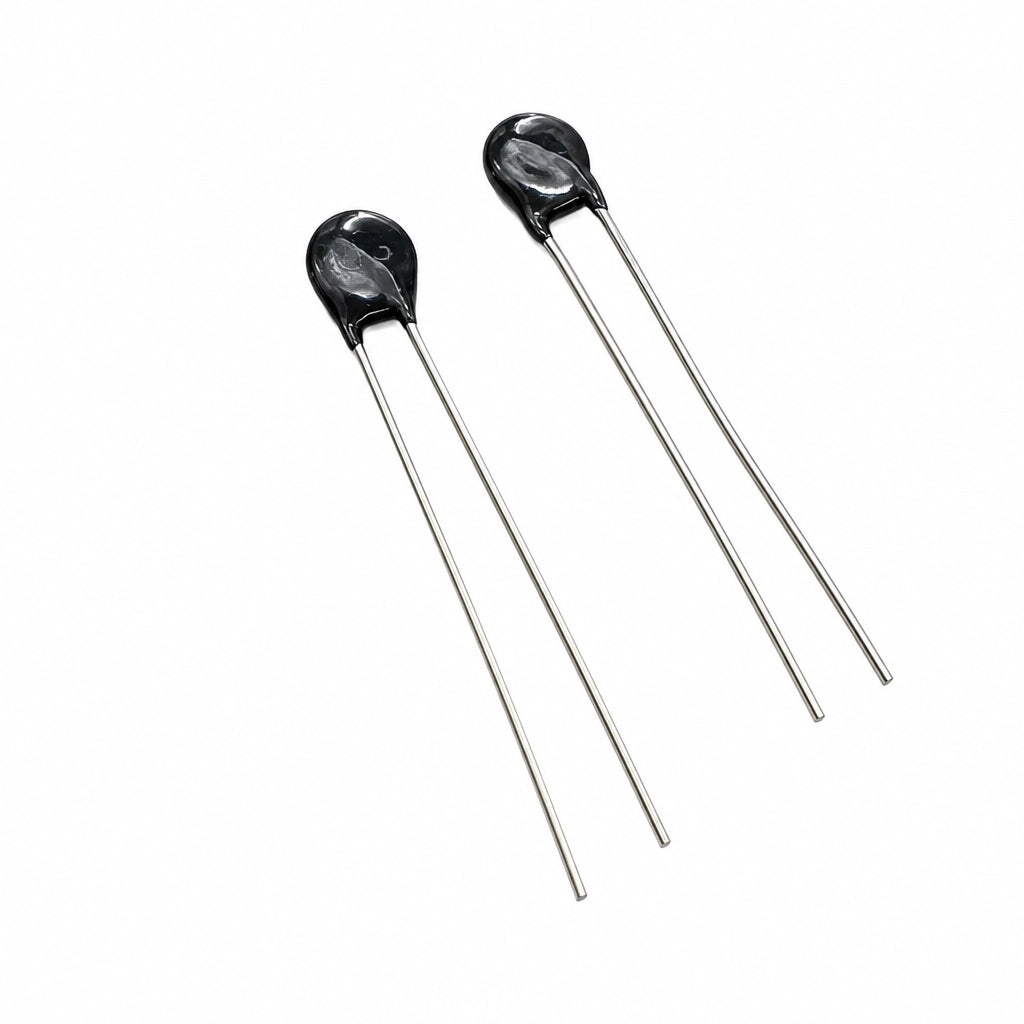
10K Ohm 103 NTC Thermistor Temperature Sensor Pack of 2 | 10K Temperature Dependent Resistor for Arduino, ESP32 & DIY Electronics
10K Ohm 103 NTC Thermistor Temperature Sensor Pack of 2 | 10K Temperature Dependent Resistor for Arduino, ESP32 & DIY Electronics
Couldn't load pickup availability
Share
Product Specifications
Product Type: NTC Thermistor
Resistance at 25°C: 10K Ohm (10,000Ω)
Thermistor Type: Negative Temperature Coefficient (NTC)
Temperature Response: Resistance decreases as temperature increases
Nominal Temperature: 25°C
Output Type: Variable Resistance
Interface: Analog sensing circuit
Compatibility: Arduino, ESP32 and other microcontrollers with analog inputs
Raspberry Pi Compatibility: Requires an external ADC for analog readings
Beta Value: Depends on the specific thermistor model
Tolerance: Depends on the supplied variant
Applications: Temperature Monitoring, Temperature Control, Electronics and DIY Projects
Product Description
The 10K Ohm NTC Thermistor is a temperature-sensitive electronic component used to measure and monitor temperature in various electronic applications. NTC stands for Negative Temperature Coefficient, which means its electrical resistance decreases as the surrounding temperature increases.
With a nominal resistance of 10K Ohm at 25°C, this thermistor is suitable for temperature-sensing circuits, Arduino projects, ESP32 applications and other DIY electronics systems.
It can be connected to a microcontroller through a voltage-divider circuit to convert resistance changes into measurable analog voltage readings. Using suitable calibration and temperature-conversion formulas, the microcontroller can estimate the surrounding temperature.
Whether you are developing an automatic temperature controller, a smart monitoring system or an educational science project, this thermistor is a useful component for temperature-sensing applications.
Add temperature-sensing functionality to your next electronics project! Order the 10K Ohm NTC Thermistor from HarishProjects and start building smart temperature monitoring systems.